From the blog
Clean Beauty vs. Clinical Skincare: What's the Difference?
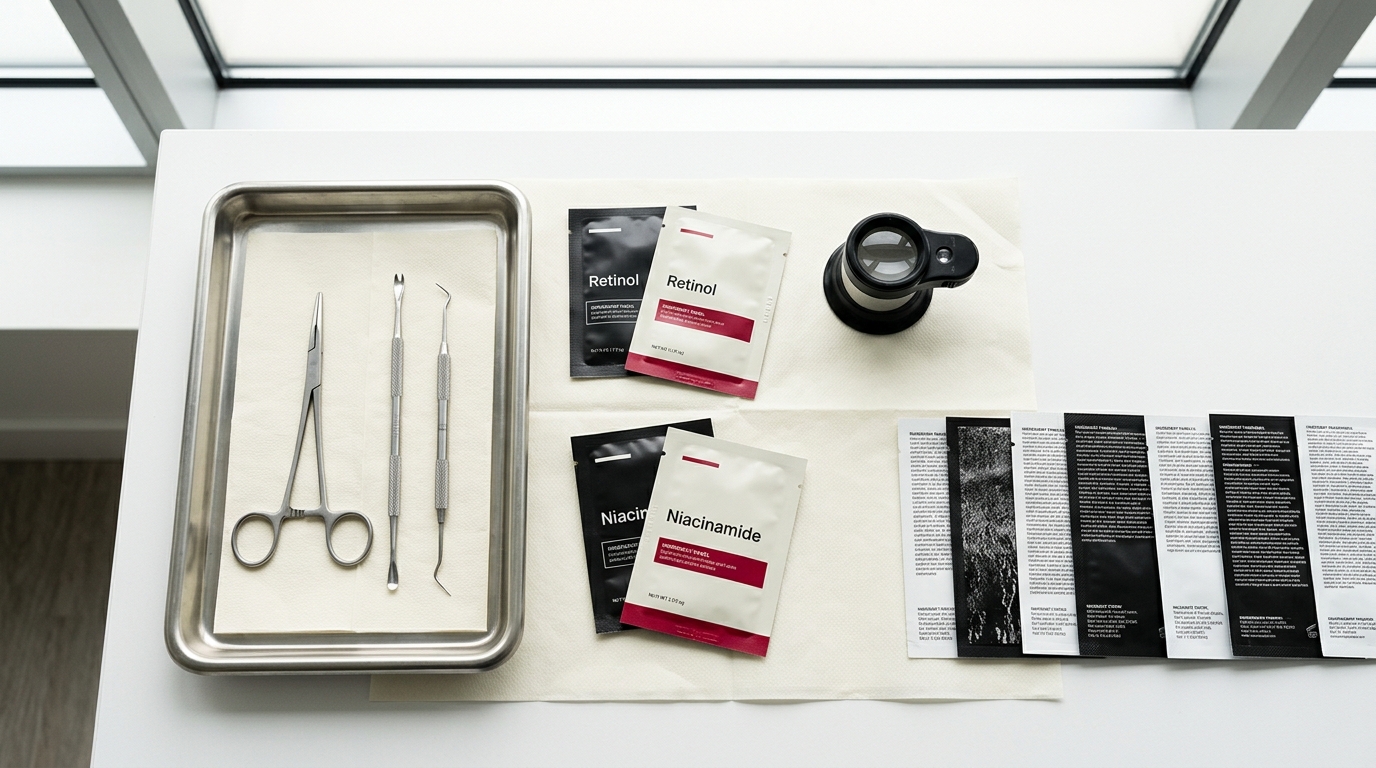
Clean beauty prioritizes ingredient transparency and the exclusion of synthetic chemicals deemed harmful, while clinical skincare prioritizes peer-reviewed efficacy, dermatologist-tested formulations, and active-ingredient concentrations proven to produce measurable results. Both approaches can coexist in a smart skincare routine - but they are not the same thing, and conflating them costs you money and results.
The distinction matters more in 2026 than ever before. The global skincare market now exceeds $180 billion, and consumers are being pitched "clean clinical" products that often blend marketing language without delivering on either promise. Understanding where each philosophy begins and ends puts you in control of your skin - and your wallet.
What Is Clean Beauty?
Clean beauty is a philosophy centered on ingredient sourcing, formulation ethics, and the elimination of specific synthetic compounds. There is no single regulatory definition of "clean" - not from the FDA, not from the EU's updated Cosmetics Regulation framework - which means the label is largely self-governed by brands and third-party retailers like Credo Beauty or the EWG Verified program.
Common ingredients excluded from clean beauty formulations include:
- Parabens (preservatives linked in some studies to endocrine disruption)
- Phthalates (plasticizers used in fragrance and packaging)
- Formaldehyde-releasing preservatives such as DMDM hydantoin
- Synthetic fragrance (a catch-all term that can mask hundreds of undisclosed chemicals)
- Oxybenzone (a UV filter flagged in reef-toxicity research)
- Sodium lauryl sulfate (SLS) in some cleansers, due to irritation potential
Clean beauty brands focus heavily on plant-derived actives, sustainably sourced botanicals, and biodegradable packaging. Brands like Ilia, Drunk Elephant, and True Botanicals have built significant audiences on this positioning. The appeal is real: consumers want to know what they're putting on their skin, and demanding ingredient transparency is a legitimate priority.
The limitation is also real: "clean" does not automatically mean effective, gentle, or safe. Poison ivy is natural. Arsenic is natural. Many botanical extracts are potent allergens. Clean beauty, at its worst, can trade one set of risks for another while charging a premium for the reassurance.
What Is Clinical Skincare?
Clinical skincare is formulated around evidence - specifically, controlled clinical trials, dermatologist testing, and active-ingredient concentrations that have been shown to produce measurable change in skin structure or behavior. The word "clinical" should signal that a product has been tested on human subjects under dermatological supervision, with quantifiable outcomes.
Key active categories in clinical skincare include:
- Retinoids (retinol, retinal, tretinoin) - proven to accelerate cell turnover and stimulate collagen
- L-ascorbic acid (Vitamin C) at concentrations of 10–20% - antioxidant protection and brightening
- Niacinamide at 4–10% - barrier support, pore appearance, and pigmentation control
- Alpha hydroxy acids (AHAs) such as glycolic and lactic acid - exfoliation and texture refinement
- Peptides- signal proteins that support collagen synthesis
- Azelaic acid at 10–20% - rosacea, acne, and post-inflammatory hyperpigmentation
Clinical skincare brands - think SkinCeuticals, La Roche-Posay, Medik8, and Obagi - invest in the research to justify their active concentrations. SkinCeuticals' C E Ferulic, for example, is backed by a patented Duke University study validating its antioxidant efficacy at a specific pH. That's not marketing language - it's a peer-reviewed foundation.
The trade-off is that clinical formulations often include synthetic stabilizers, preservatives, or emulsifiers that a clean beauty consumer would flag. High-concentration Vitamin C requires a low pH environment and robust preservation that plant-derived alternatives rarely provide at scale.
Clean Beauty vs. Clinical Skincare: 6 Key Differences
Category Clean Beauty Clinical Skincare Guiding Principle Ingredient safety and transparency Proven efficacy and active-ingredient science Regulation Self-governed; no universal standard Dermatologist-tested; some products are OTC drugs (e.g., benzoyl peroxide) Key Actives Botanicals, plant oils, natural extracts Retinoids, AHAs, vitamin C, peptides at therapeutic concentrations Evidence Base Often brand-funded or anecdotal Controlled clinical trials, peer-reviewed studies Irritation Risk Lower synthetic load, but botanical allergen risk Higher active-concentration risk, especially retinoids and AHAs Sustainability Focus Central to brand identity Secondary to formulation efficacyWhere the Two Overlap
The cleanest development in modern skincare is that these categories are converging - strategically, not just rhetorically. Brands like Biossance (using squalane derived from sugarcane rather than sharks) and Alpyn Beauty deliver clinical-level actives in clean-certified formulations. Niacinamide, for example, is synthetically derived but appears on almost no clean beauty "avoid" lists because its safety profile is well-established.
Retinoids have also entered the clean conversation through bakuchiol - a plant-derived compound that a 2019 study published in the British Journal of Dermatology found produced comparable results to 0.5% retinol in reducing fine lines and hyperpigmentation over 12 weeks. Bakuchiol has become a flagship ingredient for brands trying to bridge both worlds.
However, "clean clinical" as a label still requires scrutiny. Ask these questions before you buy:
- What percentage of the active ingredient is in the formula?
- Has this product been tested in a clinical setting with published or citable results?
- Which specific ingredients are excluded, and why?
- Is the "clean" certification from a recognized third party like EWG Verified or Credo?
Which Approach Is Right for You?
Your skin concern should drive the decision, not the marketing aesthetic.
Choose clean beauty as your primary framework if: You have reactive or sensitive skin with a history of reactions to synthetic preservatives or fragrances. You prioritize ingredient transparency and sustainability as values. You're managing skin during pregnancy, when many high-dose actives (especially retinoids) are contraindicated.
Choose clinical skincare as your primary framework if: You're targeting specific, measurable concerns - acne, melasma, deep wrinkles, significant texture issues. You want your product investment backed by evidence. You've tried botanical approaches and haven't seen results.
Build a hybrid routine if: You want the ethical assurance of clean formulations for your hydration and barrier layers (moisturizers, cleansers, oils) while relying on clinical actives (retinoids, AHAs, Vitamin C serum) for targeted treatment steps. This is increasingly the approach recommended by board-certified dermatologists in 2026.
The Bottom Line
Clean beauty and clinical skincare answer different questions. Clean beauty asks: what's in this product, and is it safe? Clinical skincare asks: does this product work, and can we prove it? Neither question is wrong. The smartest skincare routine uses both lenses - demanding transparency about ingredients and demanding evidence for efficacy. Don't let the marketing vocabulary of either camp replace your own critical thinking.
Is clean beauty regulated by the FDA?
No. The FDA does not define or regulate the term "clean beauty." The label is self-applied by brands or governed by third-party retailers and certification programs like EWG Verified or Credo's Clean Standard. This means "clean" can mean different things across different brands, so always read the full ingredient list rather than relying on the label alone.
Does clean beauty actually work for anti-aging?
Some clean beauty actives - bakuchiol, vitamin C from ascorbyl glucoside, niacinamide, and plant-derived squalane - have solid evidence for anti-aging benefits. However, high-dose retinoids and prescription-strength AHAs remain the most clinically validated anti-aging ingredients. A clean routine can produce visible improvements, but clinical actives typically produce faster, more measurable results for significant concerns like deep wrinkles or melasma.
Is clinical skincare safe for sensitive skin?
Clinical skincare can be formulated for sensitive skin - La Roche-Posay and Avène, for example, build their entire brand around dermatologist-tested tolerance. The key is starting at lower active concentrations, buffering retinoids with moisturizer, and patch-testing new actives. High-concentration AHAs and retinoids cause purging or irritation in some users regardless of skin type, so introduce them gradually.
Can I mix clean beauty and clinical skincare products in the same routine?
Yes, and this is a common approach recommended by dermatologists. A typical hybrid routine might use a clean, fragrance-free cleanser and a plant-oil-based moisturizer alongside a clinical-grade retinol serum and a dermatologist-tested SPF. The products don't conflict at the skin level - what matters is formulation compatibility (pH, active layering order) rather than whether each product carries a clean label.
What's the difference between "natural," "organic," and "clean" in skincare?
"Natural" means ingredients are derived from natural sources - it has no regulatory definition in cosmetics. "Organic" means ingredients were grown without synthetic pesticides and can be certified by USDA NOP or COSMOS Organic standards. "Clean" means the brand has excluded a specific list of ingredients deemed potentially harmful - it does not require natural or organic sourcing. A product can be organic but not clean, or clean but not natural.

